Service Depot is a holding company acquiring founder-led commercial facilities services companies — each bringing a credentialed specialty in a niche vertical: healthcare, data centers, cleanrooms, manufacturing, corporate HQ, large retail, airports — across major US metros, and running them on one shared operating platform.
Targeting 10–12 operating companies across 12 metros, toward roughly $500M of group revenue at scale.
Founder-led facilities companies — many founded in the 1960s–90s, now facing succession — sell for a fraction of what consolidated platforms trade for. The spread between those two prices is the return. Everything else in this plan exists to make sure the spread is earned rather than assumed.
The exit is deliberately benchmarked to the listed industry leader — the pure-play facilities services comparable, five-year median ≈9× EV/EBITDA. Any premium the platform earns over the sector leader is upside; the underwriting does not depend on it.
Owners in their sixties and seventies with no internal successor, in a category private equity has largely walked past. Entry prices reflect a thin buyer pool, not a weak business.
Twelve back offices become one. The direct labor that actually services the building stays local, and stays employed.
Scale, audited protocol standardization and national account coverage are what move a business from private multiples to public ones. A group of unintegrated companies re-trades at the price it was bought for.
Commodity office cleaning is re-bid on price every cycle, so efficiency gains there get handed straight to the customer. Hospitals and medical office buildings, data centers, cleanrooms, manufacturing plants, large retail portfolios, airports and Class-AA corporate campuses behave differently, and that difference is the moat.

Healthcare
Data centers
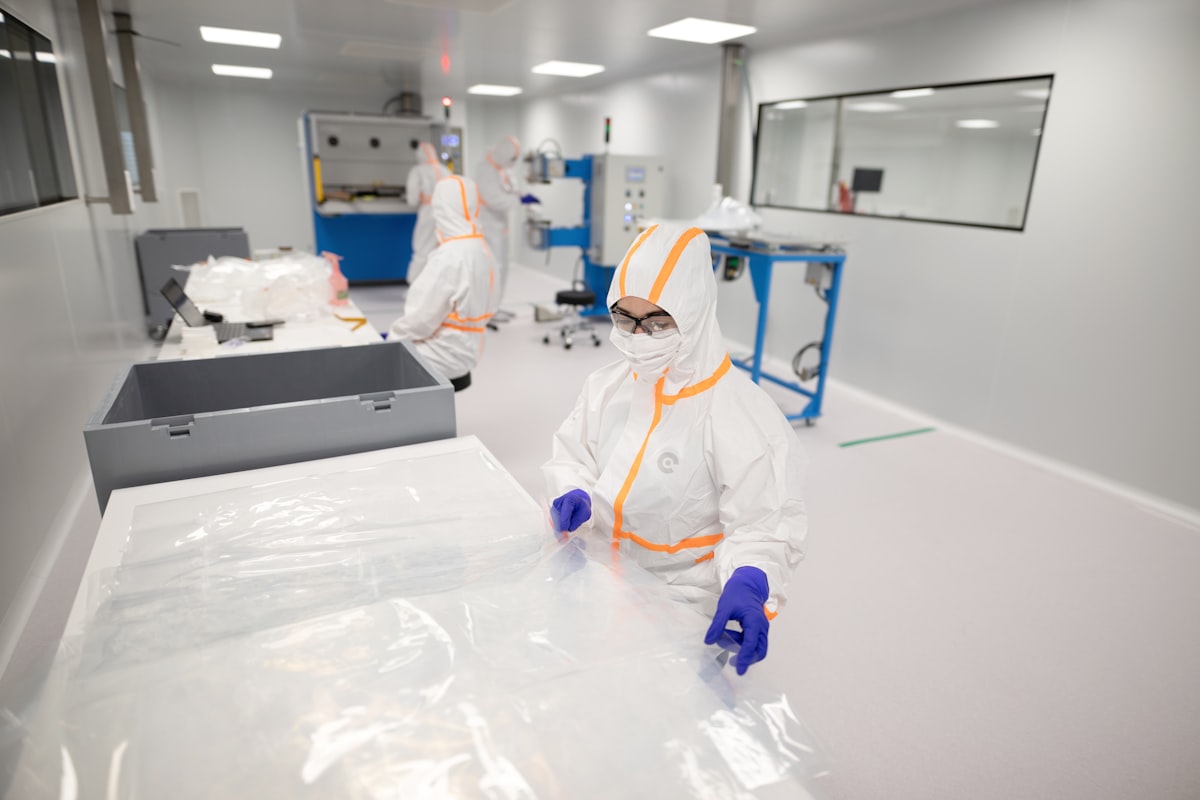
Cleanrooms
Manufacturing
Corporate HQ
Large retail
AirportsA failed inspection, a contamination event, a security lapse — in these environments it's a clinical, operational or compliance risk, not a line item. The incumbent who has never failed holds pricing power no commodity contractor gets.
Audited protocols, documented training, background-checked, badged or cleared staff. Qualification takes months, and locks in whoever already passed — in whichever niche they hold it.
Health systems, data center operators, national retailers, manufacturers and airport authorities procure city-by-city from fragmented local vendors. One vendor, one SLA, one audited standard across their portfolio is a product nobody local can offer.
Venture capital has crowded into legal, accounting and contact-center roll-ups, where the work being automated is the work being sold. Facilities services stayed fragmented: thousands of owner-operated companies, contracted revenue that renews on multi-year cycles, and in credentialed niches like healthcare, structural protection from the price erosion that undoes cost-synergy stories.
No AI cleans an exam room, and we don't underwrite as if one will. Direct labor stays local, led by a GM in each market. What consolidates is the 15–20% of revenue that is overhead, and the bidding decisions where contractors quietly win or lose their margin.
Every hour a supervisor spends rebuilding a schedule after a callout, or re-keying an inspection log, is an hour not spent on the floor with a crew. Janitorial turnover runs punishingly high across the industry, and turnover is expensive twice over: rehiring cost, and the service failures that cost contracts.
Consolidating the paperwork is what makes better pay, real training and reliable schedules affordable at 10% margins. Crew retention is the operating metric the model is most sensitive to, which is the rare case where the decent thing and the underwritten thing are the same thing.
The AI roll-up category is crowded with decks promising software margins on services revenue. This one is underwritten at margins the industry actually delivers, and structured so sellers stay invested in the handover.
Every assumption above is a slider in the full model, including the downside cases. It's available to serious investors on request.
The venture-backed consolidators in adjacent categories were created by funds who then hired operators. Service Depot inverts that order: it is led by an operator with decades in commercial facilities services, and the capital is being raised behind him. In a business whose classic failure is cutting the wrong supervisor and losing the crews, that ordering is the risk control.
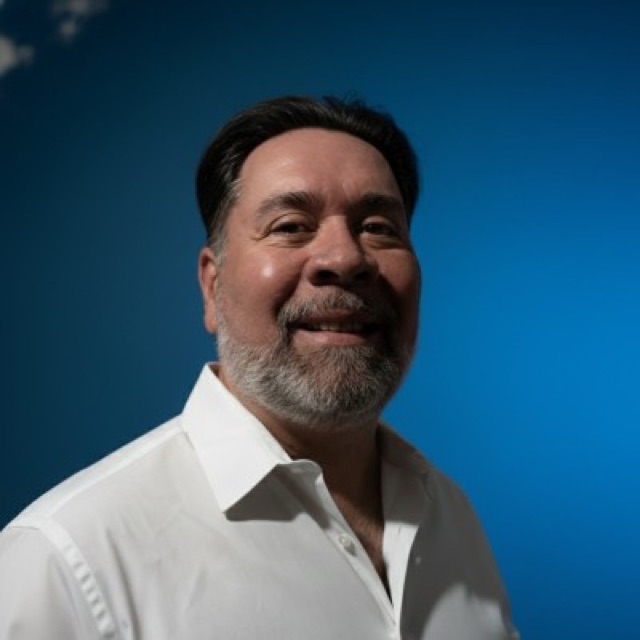
Paul's father arrived from Cuba and built a janitorial company cleaning hospitals in Northern Virginia. Paul grew up inside it — working in the business from childhood, running it by age 23, and growing it to roughly thirty commercial and medical-office properties, including Kaiser Permanente sites. Healthcare facilities aren't a market he researched; they're the family trade.
He spent the next two decades as a senior executive at a national facilities services contractor, most recently as Executive Vice President, running operations across Dulles and Reagan National airports, an NIH headquarters campus contract, 150+ healthcare facilities, Class-AA commercial buildings, data centers and manufacturing plants: over 300 sites nationally, 3,000+ employees and subcontractor crews, $100M+ budgets.
Which add-backs are real. Which supervisors are load-bearing and which are fat. What a hospital contract actually costs to service once infection-control protocol is priced in. What a national account will demand in year two that it never mentioned in the RFP.
None of those are visible in a data room. They are pattern recognition built on the operating side of exactly those calls, in exactly the buildings this thesis concentrates in.
Service Depot is in active diligence on several East Coast contractors serving Fortune 500 and institutional facilities, and is raising holdco capital to fund the platform and the acquisition pipeline behind it.
The full interactive model — deal structure, debt coverage, AI synergy assumptions, exit scenarios and sensitivity tables — is available to serious investors on request. Every assumption is a slider; stress it yourself.